books
the books I keep going back to, the ones that changed how I see things. take one off the shelf to see what it's about.
seekers
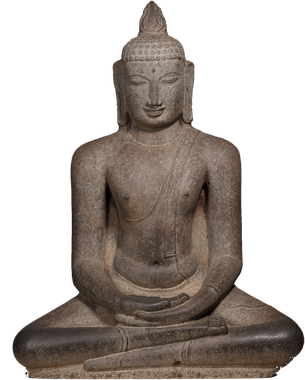
Siddhartha Hermann Hesse Narcissus and Goldmund Hermann Hesse The Glass Bead Game Hermann Hesse The Dharma Bums Jack Kerouac The Overstory Richard Powers Buddha seated in meditation granite, Nagapattinam, Chola period, about 12th century
a quieter mind
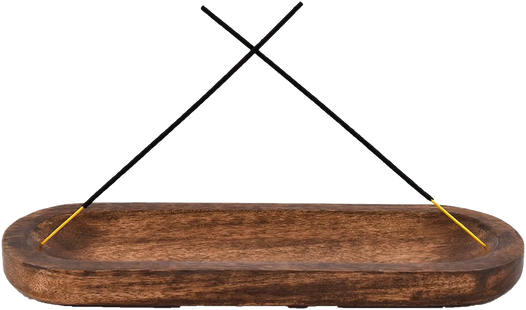
The Book: On the Taboo Against Knowing Who You Are Alan Watts Freedom from the Known Jiddu Krishnamurti The Power of Now Eckhart Tolle Incense two sticks on a wooden tray
a steadier self
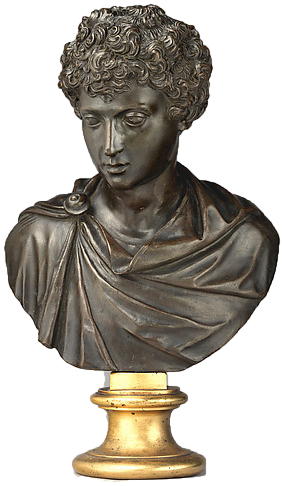
Marcus Aurelius bronze, late 16th century Meditations Marcus Aurelius Self-Reliance Ralph Waldo Emerson Ego Is the Enemy Ryan Holiday
how the world works
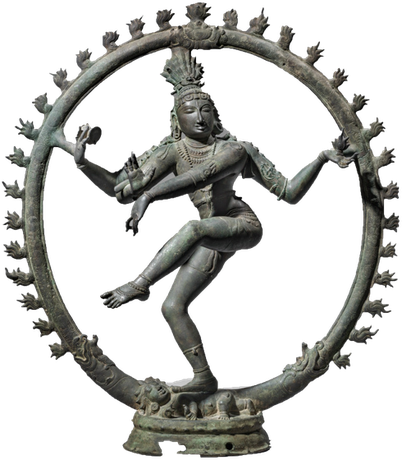
Nataraja, Shiva as the Lord of Dance bronze, Tamil Nadu, Chola period, 11th century Ideas and Opinions Albert Einstein The Feynman Lectures on Physics Richard P. Feynman, Robert B. Leighton and Matthew Sands Art & Physics: Parallel Visions in Space, Time, and Light Leonard Shlain Adventures in Human Being Gavin Francis
stories
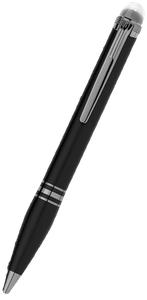
Montblanc StarWalker ballpoint, Ultra Black resin Haroun and the Sea of Stories Salman Rushdie The Night Circus Erin Morgenstern The Power Naomi Alderman The Hitchhiker's Guide to the Galaxy Douglas Adams Foundation Isaac Asimov
short stories
Shooting an Elephant George Orwell The Last Question Isaac Asimov The Last Question Isaac Asimov The Metamorphosis Franz Kafka Bose headphones over-ear, noise cancelling
lives
Becoming Michelle Obama A Promised Land Barack Obama Steve Jobs Walter Isaacson An Astronaut's Guide to Life on Earth Chris Hadfield Montblanc notebook black leather, my StarWalker clipped to its cover
the objects on the shelves
some of the things standing at the ends of the shelves are museum pieces, photographed by the museums that keep them and shared for anyone to use. the others are my own.
Buddha seated in meditation , granite, Nagapattinam, Chola period, about 12th century. The Art Institute of Chicago Incense, two sticks on a wooden tray. My own. Photo: the tray's seller.
Marcus Aurelius , bronze, late 16th century. The Metropolitan Museum of Art Nataraja, Shiva as the Lord of Dance , bronze, Tamil Nadu, Chola period, 11th century. The Cleveland Museum of Art Montblanc StarWalker, ballpoint, Ultra Black resin. My own. Photo: Pen Boutique.
Bose headphones, over-ear, noise cancelling. My own. Photo: Bose.
Montblanc notebook, black leather, my StarWalker clipped to its cover. My own. Photo: Montblanc and Pen Boutique.
× close
first published 1922
translated by Hilda Rosner
about the book Hermann Hesse wrote Siddhartha in German and published it in 1922, shaped by his long interest in Indian thought. The short novel follows a young Brahmin's son in ancient India who leaves his father's house to search for peace. He lives among wandering ascetics, meets the Buddha, takes up trade and love in a city, and later learns from a ferryman beside a river. The book is split into two parts and told in plain, rhythmic prose that reads a little like a fable.
my notes on this one are still to come.
← previousAn Astronaut's Guide to Life on Earth next → Narcissus and Goldmund
Cover from Open Library
Narcissus and Goldmund
Hermann Hesse
first published 1930
translated by Ursule Molinaro
about the book Hermann Hesse published Narcissus and Goldmund in German in 1930. It is set in medieval Germany and opens at the monastery of Mariabronn, where the studious young monk Narcissus befriends Goldmund, a pupil with a restless, sensual nature. Goldmund leaves the cloister to wander the roads, taking lovers, working under a master woodcarver and passing through towns struck by plague. The two friends are written as opposites, one given to thought and the other to feeling, and the story follows how their lives pull apart and cross again.
my notes on this one are still to come.
← previousSiddhartha next → The Glass Bead Game
Cover from Open Library
The Glass Bead Game
Hermann Hesse
first published 1943
translated by Richard and Clara Winston
about the book Hermann Hesse's last novel appeared in Zurich in 1943, because his books could no longer be printed in Germany. He received the Nobel Prize in Literature in 1946. The story is set centuries in the future in Castalia, a secluded province where scholars give their lives to the Glass Bead Game, a form that links music, mathematics and art. A later historian narrates the biography of Josef Knecht, a gifted pupil who climbs through the order's ranks, and the book ends with poems and short lives written by Knecht himself.
my notes on this one are still to come.
← previousNarcissus and Goldmund next → The Dharma Bums
Cover from Open Library
The Dharma Bums
Jack Kerouac
first published 1958
about the book Jack Kerouac published The Dharma Bums in 1958, a year after On the Road. Its narrator, Ray Smith, drifts between freight trains, San Francisco poetry readings and mountain trails, and he befriends Japhy Ryder, a character drawn from the poet Gary Snyder. The two climb in the Sierra Nevada and talk about Zen Buddhism, poverty and life outdoors. Most of the book is set in California and the Pacific Northwest, and it is based on events Kerouac lived in the mid-1950s.
my notes on this one are still to come.
← previousThe Glass Bead Game next → The Overstory
Cover from Open Library
The Overstory
Richard Powers
first published 2018
about the book Richard Powers's twelfth novel came out in 2018 and won the Pulitzer Prize for Fiction the following year. It follows nine people whose lives are each bound up with trees: an artist whose family has photographed one chestnut for generations, a scientist who discovers that trees signal to one another, a veteran who comes home and plants. Their stories draw together in the fight to save the last old-growth forests of the American West. The book is built like a tree, in parts called roots, trunk, crown and seeds, and asks what it would take for people to see the living world as something more than a resource.
my notes on this one are still to come.
← previousThe Dharma Bums next → The Book: On the Taboo Against Knowing Who You Are
Cover from Open Library
The Book: On the Taboo Against Knowing Who You Are
Alan Watts
first published 1966
about the book Alan Watts, a British-born writer who settled in California, published The Book in 1966 with the subtitle On the Taboo Against Knowing Who You Are. It is a short essay that draws on Vedanta, a school of Hindu philosophy, and on modern science. Watts argues that the feeling of being a separate self inside the skin is a social habit, and he describes the world as a single process that plays hide-and-seek with itself. The tone is conversational, close to the way he spoke in his radio talks.
my notes on this one are still to come.
← previousThe Overstory next → Freedom from the Known
Cover from Open Library
Freedom from the Known
Jiddu Krishnamurti
first published 1969
about the book Freedom from the Known came out in 1969, put together by Mary Lutyens from talks Krishnamurti had given around the world. He had been raised by the Theosophical Society to be a world teacher, and in 1929 he dissolved the order built around him, saying that truth is a pathless land. The book carries that refusal of authority, his own included. It asks the reader to look at fear, violence, ambition and the search for pleasure directly, without the screen of memory, tradition and ready-made ideas, and argues that only a mind that sees itself as it is, moment to moment, can be free.
my notes on this one are still to come.
← previousThe Book: On the Taboo Against Knowing Who You Are next → The Power of Now
Cover from Open Library
The Power of Now
Eckhart Tolle
first published 1997
about the book Eckhart Tolle, born in Germany and later based in Canada, published The Power of Now in 1997 with the subtitle A Guide to Spiritual Enlightenment. Much of it is laid out as questions and answers. It asks the reader to pay attention to the present moment and to notice the running commentary of the thinking mind. Tolle describes a sudden inner change at the age of 29 as the starting point for the book. It sold slowly at first and reached a very large audience over the following years.
my notes on this one are still to come.
← previousFreedom from the Known next → Meditations
Cover from Open Library
Meditations
Marcus Aurelius
first published c. 170–180
translated by Gregory Hays
about the book Marcus Aurelius, Roman emperor from 161 to 180, wrote these notes to himself in Greek, much of it on campaign along the Danube frontier. They were never meant for readers, and the original title is usually given as To Himself. The text runs to twelve books of short entries, reminders and exercises drawn from Stoic philosophy, on duty, anger, death and the shortness of life. One of the best known opens by listing the difficult people the day will bring and how to meet them.
my notes on this one are still to come.
← previousThe Power of Now next → Self-Reliance
Cover from Open Library
Self-Reliance
Ralph Waldo Emerson
first published 1841
about the book Emerson published Self-Reliance in 1841, in his first collection of essays. Its argument is that each person should trust their own thought over custom, reputation and the approval of others: "Trust thyself: every heart vibrates to that iron string." He asks for nonconformity and for the nerve to change your mind in public, and it is here that he writes that "a foolish consistency is the hobgoblin of little minds." The essay became one of the founding texts of American individualism and shaped Thoreau and many writers after him.
my notes on this one are still to come.
← previousMeditations next → Ego Is the Enemy
Cover from Open Library
Ego Is the Enemy
Ryan Holiday
first published 2016
about the book Ryan Holiday published Ego Is the Enemy in 2016, two years after The Obstacle Is the Way. Holiday is an American author who draws on Stoic philosophy. The book is organised in three parts called Aspire, Success and Failure. In each he uses short historical and business examples, among them the American general George Marshall, to show how self-importance gets in the way of good work. The chapters are brief and the prose is direct.
my notes on this one are still to come.
← previousSelf-Reliance next → Ideas and Opinions
Cover from Open Library
Ideas and Opinions
Albert Einstein
first published 1954
about the book Ideas and Opinions is a collection of Albert Einstein's essays, speeches and letters, first published in English in 1954 by Crown in New York. It builds on Mein Weltbild, an earlier German collection of his writings, with later pieces added, and Sonja Bargmann prepared the English translation. The pieces cover physics and the nature of scientific thinking as well as pacifism, religion, education and politics, and they range from the early twentieth century to the early 1950s.
my notes on this one are still to come.
← previousEgo Is the Enemy next → The Feynman Lectures on Physics
Cover from Open Library
The Feynman Lectures on Physics
Richard P. Feynman, Robert B. Leighton and Matthew Sands
first published 1963–1965
about the book The Feynman Lectures on Physics grew out of an introductory course that Richard Feynman taught to Caltech undergraduates in 1961 to 1963. Robert Leighton and Matthew Sands edited the recorded lectures into three volumes, published by Addison-Wesley between 1963 and 1965. Volume I covers mechanics, radiation and heat, Volume II covers electromagnetism and matter, and Volume III covers quantum mechanics. Feynman shared the 1965 Nobel Prize in Physics for his work on quantum electrodynamics, the year the last volume appeared.
my notes on this one are still to come.
← previousIdeas and Opinions next → Art & Physics: Parallel Visions in Space, Time, and Light
Cover from Open Library
Art & Physics: Parallel Visions in Space, Time, and Light
Leonard Shlain
first published 1991
about the book Leonard Shlain, a surgeon in San Francisco, published Art & Physics in 1991. His argument is that radical artists often arrive at a new picture of space and time before physicists give it a mathematical form. He sets Cubism beside relativity and Impressionism beside the study of light, and he follows the pattern into quantum theory and abstract art. The book is illustrated with paintings and diagrams, and it moves roughly in order of time, from ancient Greece to the twentieth century.
my notes on this one are still to come.
← previousThe Feynman Lectures on Physics next → Adventures in Human Being
Cover from Open Library
Adventures in Human Being
Gavin Francis
first published 2015
about the book Gavin Francis is a Scottish doctor who has worked as a family physician in Edinburgh and as a medical officer at a research station in Antarctica. He published Adventures in Human Being in 2015. The book tours the body part by part, from the brain to the feet, and mixes anatomy and the history of medicine with cases from his own practice. Each chapter takes one region and asks what it does, how it fails and what people have believed about it over time.
my notes on this one are still to come.
← previousArt & Physics: Parallel Visions in Space, Time, and Light next → Haroun and the Sea of Stories
Cover from Open Library
Haroun and the Sea of Stories
Salman Rushdie
first published 1990
about the book Salman Rushdie wrote Haroun and the Sea of Stories for his young son Zafar while living in hiding after the fatwa of 1989, and it was published in 1990. Haroun is a boy whose father Rashid, a famous storyteller known as the Shah of Blah, suddenly loses his talent. Haroun travels to a hidden moon where all the world's stories flow in a great ocean, and he finds the ocean under threat. It is a children's novel full of wordplay, and many of its character names are puns.
my notes on this one are still to come.
← previousAdventures in Human Being next → The Night Circus
Cover from Open Library
The Night Circus
Erin Morgenstern
first published 2011
about the book The Night Circus, published in 2011, was Erin Morgenstern's first novel, and she began it as a National Novel Writing Month project. Le Cirque des Rêves arrives without warning, opens only after dark and is built entirely in black and white. Behind it, two young illusionists, Celia and Marco, have been trained by their teachers for a contest whose rules neither fully understands. The chapters move between several years from 1873 on, and between the circus and the wider world.
my notes on this one are still to come.
← previousHaroun and the Sea of Stories next → The Power
Cover from Open Library
first published 2016
about the book Naomi Alderman published The Power in 2016, and it won the Baileys Women's Prize for Fiction in 2017. In the novel, teenage girls around the world discover they can release electric shocks from their hands, and women slowly become the physically stronger sex. The story follows several characters, including an American politician, a runaway and a young man working as a journalist. It is framed as a historical manuscript sent by one author to another.
my notes on this one are still to come.
← previousThe Night Circus next → The Hitchhiker's Guide to the Galaxy
Cover from Open Library
The Hitchhiker's Guide to the Galaxy
Douglas Adams
first published 1979
about the book Douglas Adams's novel came out in 1979, a year after the BBC radio comedy series it grew out of. Minutes before the Earth is demolished to make way for a hyperspace bypass, Arthur Dent is rescued by his friend Ford Prefect, who turns out to be a researcher for an electronic guidebook with the words Don't Panic on its cover. The two hitch a ride across the galaxy, and along the way the book reveals that a vast computer, asked for the answer to life, the universe and everything, worked on the question for seven and a half million years and came up with 42.
my notes on this one are still to come.
← previousThe Power next → Foundation
Cover from Open Library
first published 1951
about the book Foundation came out as a book in 1951, gathering stories Asimov had written for the magazine Astounding Science Fiction in the 1940s. The mathematician Hari Seldon has worked out psychohistory, a science that predicts how very large populations will behave, and it tells him the Galactic Empire is about to fall into thirty thousand years of barbarism. He cannot stop the fall, so he founds a colony of scholars on the remote planet Terminus to shorten the dark age to a thousand years. The book jumps forward by decades from one crisis to the next as his plan plays out.
my notes on this one are still to come.
← previousThe Hitchhiker's Guide to the Galaxy next → Shooting an Elephant
Cover from Open Library
Shooting an Elephant
George Orwell
first published 1936
about the book Orwell published Shooting an Elephant in 1936, drawing on his five years as a police officer in British-ruled Burma in the 1920s. The narrator, posted to the town of Moulmein, is called out when a working elephant breaks its chain and kills a man. By the time he finds it, the elephant is calm and grazing in a field, and he has no wish to shoot it, but a crowd of at least two thousand people has followed him to watch. He shoots it so as not to look a fool, and comes to see that the ruler of an empire gives up his own freedom too. It is usually read as an essay, and how much of it happened as told is still argued over.
my notes on this one are still to come.
← previousFoundation next → The Last Question
Cover from Open Library
The Last Question Isaac Asimov
The Last Question
Isaac Asimov
first published 1956
about the book The Last Question first appeared in the magazine Science Fiction Quarterly in November 1956, and Asimov often named it as his favourite of all his stories. It opens in 2061 with two technicians who, after a few drinks, ask the giant computer Multivac whether the slow running down of the universe, as the stars burn out, can ever be reversed. The same question is put again and again over trillions of years, to ever greater successors of the machine, and each time the answer is that there is not yet enough data for a meaningful answer.
my notes on this one are still to come.
← previousShooting an Elephant next → The Metamorphosis
first published 1915
translated by Stanley Corngold
about the book Kafka wrote The Metamorphosis in late 1912, and it was published in 1915. Gregor Samsa, a travelling salesman who supports his parents and his younger sister, wakes one morning to find himself changed into what Kafka calls a monstrous vermin, and his first worry is that he will miss his train to work. Almost all of the story takes place inside the family's flat, as his parents and sister, horrified at first, come to see him as a burden they want to be rid of.
my notes on this one are still to come.
← previousThe Last Question next → Becoming
Cover from Open Library
first published 2018
about the book Becoming is Michelle Obama's memoir, published by Crown in November 2018. It is divided into three sections titled Becoming Me, Becoming Us and Becoming More. She starts with her childhood on the South Side of Chicago, in a small apartment shared with her parents and her brother, and goes on to Princeton, Harvard Law School, her legal career and her years as First Lady. The book was released alongside a tour of large arena events.
my notes on this one are still to come.
← previousThe Metamorphosis next → A Promised Land
Cover from Open Library
A Promised Land
Barack Obama
first published 2020
about the book A Promised Land is the first volume of Barack Obama's presidential memoir, published by Crown in November 2020. It begins with his early political career and the 2008 campaign, then covers the first term, including the financial crisis and the passage of the Affordable Care Act. It ends in 2011 with the raid on Osama bin Laden's compound in Pakistan. The book runs to roughly 700 pages, and Obama has said he wrote much of it in longhand on legal pads.
my notes on this one are still to come.
← previousBecoming next → Steve Jobs
Cover from Open Library
Steve Jobs
Walter Isaacson
first published 2011
about the book Walter Isaacson's biography of Steve Jobs was published by Simon & Schuster in October 2011, a few weeks after Jobs died. Isaacson drew on more than forty interviews with Jobs, held over two years, and on conversations with family, friends, colleagues and rivals. The book follows Jobs from his adoption and school years through the founding of Apple, his years running NeXT and Pixar, and his return to Apple. Isaacson had earlier written biographies of Benjamin Franklin and Albert Einstein.
my notes on this one are still to come.
← previousA Promised Land next → An Astronaut's Guide to Life on Earth
Cover from Open Library
An Astronaut's Guide to Life on Earth
Chris Hadfield
first published 2013
about the book Chris Hadfield published this book in 2013, the year he became the first Canadian to command the International Space Station. He decided at nine, watching the Apollo 11 landing on television, that he would become an astronaut, and the book follows the long road there, through fighter and test pilot work to three flights into space. Each chapter turns a habit from astronaut training into advice for life on the ground: sweat the small stuff, rehearse what could go wrong, and when you join a new team, aim at first to be a zero, someone who causes no trouble.
my notes on this one are still to come.
← previousSteve Jobs next → Siddhartha
Cover from Open Library